Watch the Webinar: The Value of Water — Rethinking Flows in the Upper Murrumbidgee
The future of the Upper Murrumbidgee is approaching a critical moment. In July 2026, the Independent Review Panel will release draft recommendations that will shape the river’s survival. Before those recommendations are presented to governments, the public will have an opportunity to review them and have their say.
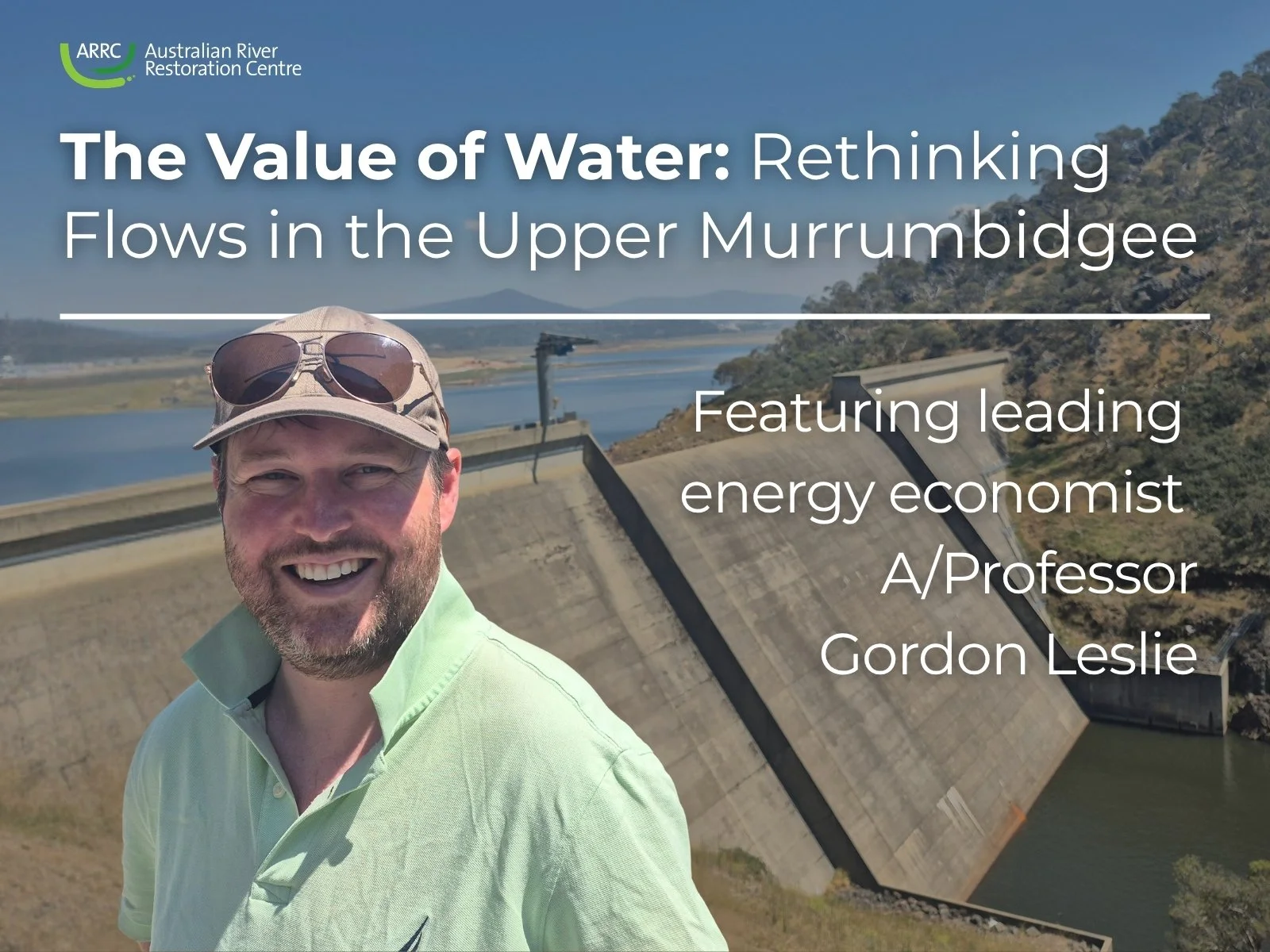
That's why through The Forgotten River campaign, we hosted energy economist Associate Professor Gordon Leslie to explore one of the Upper Murrumbidgee's most pressing questions: how should scarce water be allocated between electricity generation, environmental flows, irrigation, drinking water and recreation?
Gordon brought his expertise in electricity markets, regulation and public policy to examine why current arrangements failed to prevent the December 2019 cease to flow event, and what a more efficient system could look like as the Review Panel develops its recommendations.
Key Insights:
The 2019 cease to flow wasn't bad luck, it was a system failure. When the Upper Murrumbidgee stopped flowing, the environmental value of releasing water was extraordinarily high, yet no additional releases occurred. What does this say about previous arrangements?
Water has three competing values at any moment in time. Releasing it down the Upper Murrumbidgee for environmental flows, releasing it for electricity generation, or keeping it stored for future option value. These values change constantly with rainfall forecasts, electricity price forecasts, environmental conditions, and grid conditions. The economic ideal adjusts to these shifts. Current rules do not.
Snowy Hydro knows what water is worth to them. We don't. Snowy Hydro Limited operates with internal estimates of the opportunity cost of water, the threshold price at which they're willing to release a fraction of water to generate energy versus keeping that fraction stored. This is private information. Any compensation framework that doesn't make this transparent risks overpaying for less water.
If you pay for an additional environmental release based on average electricity prices instead of true opportunity cost, you could pay too much. Gordon's research shows that using volume weighted average prices to value water could result in dramatically higher compensation costs. With a fixed $10 million drought relief fund, this means buying substantially less water than the framework intends.
Tasmania has already implemented an approach to this problem. The Tasmanian Economic Regulator sets water transfer prices for Hydro Tasmania using a transparent formula tied to electricity futures prices and dam levels. There is no technical impediment to adopting a similar approach on the Snowy Scheme.
The public consultation period is coming and it matters. Every dollar funds the resources we need to mobilise community response during those critical weeks when the Independent Review Panel is listening.
Help us reach people who care about this river and save its future.