
Eight truths emerging from 136 community submissions: The future of the Snowy Scheme and the Forgotten River
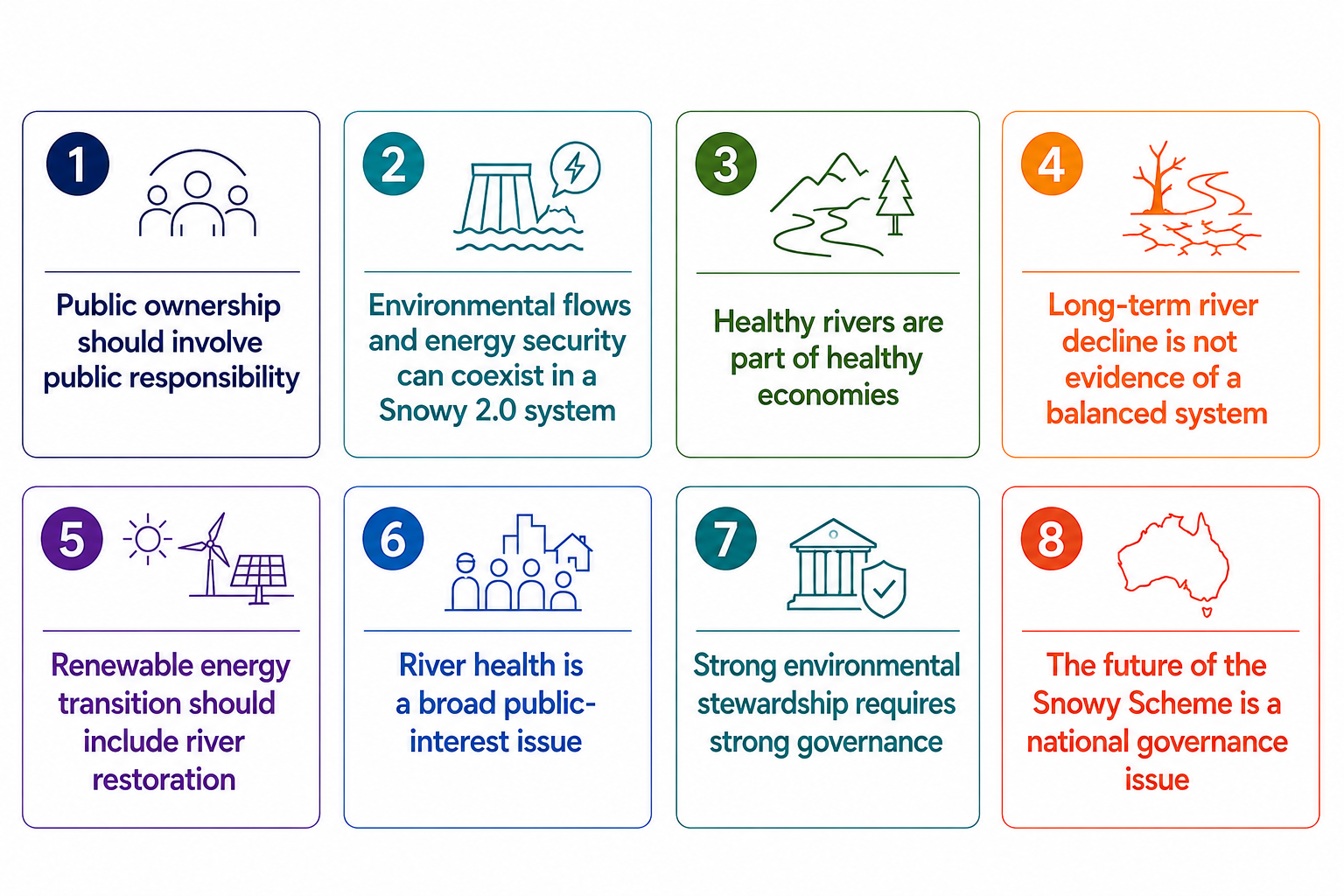
Eight truths revealed through the submission process. It is critical that each truth is addressed in the SWIOID Review - this is a National Governance Issue - the choice is not between rivers or energy
NOTE: This article does not attempt to summarise or characterise First Nations views that were not part of the material we were reviewing. The First Nations Advisory Group for the SWIOID have released a From Advisory to Custodianship Report that we recommend reading.
The release of 136 public submissions to the Snowy Water Inquiry Independent Review marks an important moment in the debate over the future of the Upper Murrumbidgee and the Snowy Scheme. Before examining the issues raised through the review process, it’s important to acknowledge the extraordinary level of public participation from a diverse range of stakeholders.
All took the time to contribute their perspectives, concerns and expertise. Regardless of differing views, that level of engagement reflects the significance of these river systems to communities across south-eastern Australia. Public participation on this scale matters. It demonstrates that the future management of the Snowy Scheme is no longer a niche policy issue. It’s now a matter of growing public interest, public concern and public expectation.
For years, public discussion about the Snowy Scheme has often been framed as a simple conflict between healthy rivers and reliable energy generation. A close reading of the submissions, however, reveals a much more complex and important conversation emerging beneath the surface.
Recurring themes appear throughout the consultation process. Concerns about river decline and ecological damage sit alongside growing frustration with governance and accountability arrangements. Questions are also being raised about whether Snowy Hydro’s public ownership is genuinely reflected in operational decision-making and whether some of the trade-offs shaping public debate are being presented too simplistically.
The release of the submissions provides an opportunity — and arguably an obligation — to test some of the most commonly repeated assumptions shaping the Snowy water debate. Many of those assumptions are now treated as settled fact, despite the submissions suggesting the reality is considerably more nuanced.
This matters because the review is not only about one river. It is also about how publicly owned infrastructure should operate in the public interest, how environmental costs are weighed against commercial returns and whether governance systems developed decades ago remain fit for purpose in a Snowy 2.0 world.
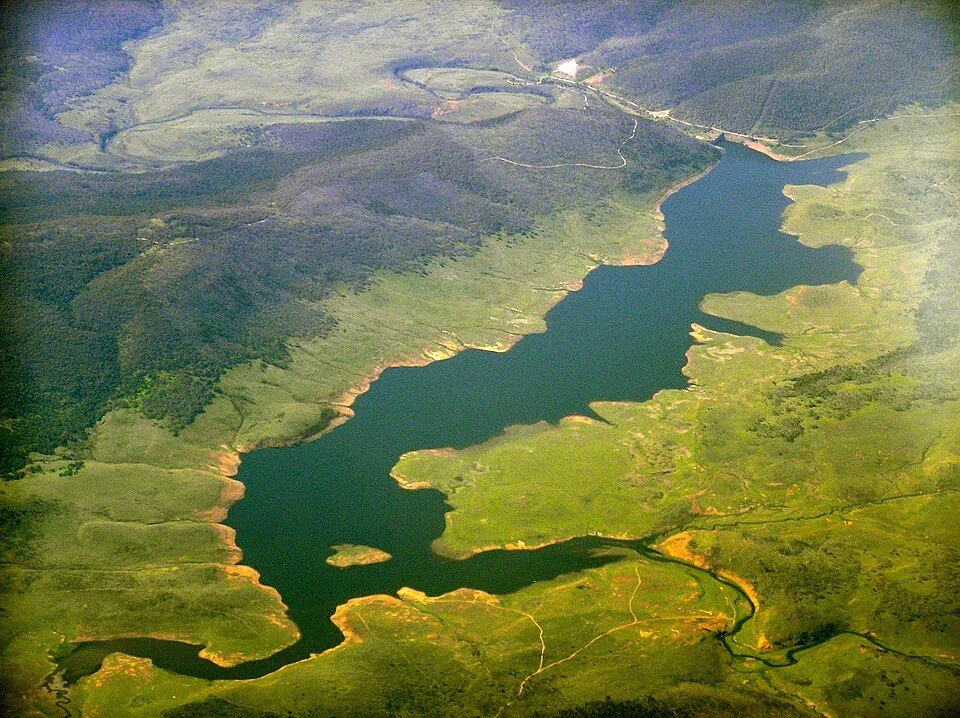
Aerial view of Tangtangara Reservoir.
The following eight truths emerge strongly from the submissions and deserve much closer public attention.
-
This may be one of the most important issues raised through the Review process.
Snowy Hydro is not a private multinational operating purely for shareholder return. It is publicly owned infrastructure built through enormous public investment and entrusted with the management of nationally significant river systems. Their business relies on use of publicly owned water and land in a national heritage site.
Many submissions therefore raise a fundamental question: does public ownership still mean anything meaningful when environmental and community outcomes repeatedly appear subordinate to commercial priorities?
The concern emerging from the consultation process is not that Snowy Hydro should stop generating electricity or cease operating as a commercially successful enterprise. The deeper concern is that the organisation increasingly appears to behave as though maximising commercial return is its primary responsibility, while environmental degradation, river decline and community impacts are treated as secondary constraints to be managed rather than core public-interest responsibilities.
This tension becomes even more significant in the context of Snowy 2.0. Pumped hydro is being publicly justified as nationally important infrastructure supporting Australia’s clean-energy transition. Yet many submissions question whether the environmental costs associated with Scheme operations are being treated with the same level of seriousness as energy security and commercial performance.
The submissions increasingly point to a growing disconnect between how Snowy Hydro presents itself publicly as a clean-energy, nation-building institution and the environmental consequences many communities continue to witness on the ground. Large sections of the Upper Murrumbidgee have experienced decades of altered flows, ecological stress and river decline since the construction of Tantangara Dam in the 1960s.
Around the world, river restoration and environmental flow reform are increasingly recognised as essential components of modern water governance. Against that backdrop, ongoing resistance to substantially improved environmental flows into the Upper Murrumbidgee risks making Australia appear increasingly out of step with contemporary standards of environmental stewardship.
Public ownership carries obligations beyond profitability alone. Those obligations become especially important where operational decisions shape public rivers, ecosystems and communities over generations.
Call to action
Public ownership of nationally significant infrastructure should carry clear environmental accountability obligations alongside commercial and operational objectives.
-
One of the most persistent assumptions shaping the Snowy water debate is that healthier rivers necessarily come at the expense of reliable energy generation. The submissions suggest the reality is considerably more complex.
Historically, hydro generation largely relied on a single-pass system where water moved through turbines once before continuing downstream. Snowy 2.0 changes that context significantly. Pumped hydro transforms water into a reusable storage and arbitrage asset within a much broader renewable energy system where value increasingly comes from flexibility, storage and market timing. Indeed, in the middle of a sunny day, Snowy Hydro can be paid to use excess electricity to pump water uphill. Hydro revenue increasingly comes from storage, flexibility and market timing rather than simply from one-off generation.
The submissions collectively suggest that the relationship between environmental releases and generation losses may no longer be as straightforward as it is often portrayed publicly. Questions are increasingly being raised about whether assumptions underpinning “foregone generation” claims properly reflect the realities of a Snowy 2.0 operating environment.
The issue is not whether trade-offs exist. The issue is whether governments should continue relying on assumptions developed for an earlier generation of hydro operations without independently testing how pumped hydro, renewable integration and future energy markets may alter the equation.
Call to action
Governments should commission independent public modelling of Snowy 2.0 operating assumptions so environmental decisions are based on transparent evidence rather than outdated energy trade-off narratives.
-
The submissions repeatedly demonstrate that river health is closely connected to recreation, tourism, fishing, community wellbeing and long-term regional resilience. Environmental flows are therefore not simply an environmental issue. They are also a social and economic issue.
Public debate often frames environmental water as water “lost” from productive use. That framing overlooks the costs associated with long-term river decline and treats environmental damage as though it carries little economic consequence. The competing interests argument is odd since environmental water releases make their way down the Murrumbidgee River to the same major irrigation districts the same as for hydropower releases minus modest transmission losses.
Many submissions describe declining river health as increasingly visible and personally experienced. Concerns are no longer limited to environmental organisations or technical experts. Local communities, recreation groups and ordinary river users are raising questions about what they are seeing happen to the river system and whether current management arrangements remain acceptable.
Many community submissions point to the economic and social consequences of declining river health, including impacts on domestic water supply, tourism, recreation, fishing, ecosystem resilience and community wellbeing. Viewed together, the submissions suggest the debate is not simply about “water lost to the environment”. The real issue concerns how costs, benefits and public value are defined, and whether some impacts are being emphasised while others are treated as secondary.
The submissions suggest the real challenge is not choosing between communities and rivers but recognising that healthy river systems are themselves critical public assets supporting communities over generations.
Call to action
Future decision-making should account for the full economic, social and environmental value of healthy river systems rather than treating environmental outcomes solely as system costs.
-
One of the clearest themes emerging from the submissions is that many people no longer believe the current system reflects an appropriate environmental balance.
Concerns raised throughout the consultation process include altered flow regimes, clogged river channels with sediment, cold water pollution, erosion, geomorphic decline, declining ecosystem resilience and the visible deterioration of river condition. Many submissions do not describe these issues as isolated or accidental. Instead, they are characterised as long-term structural consequences of how the Scheme has operated since the construction of Tantangara Dam in the 1960s.
Importantly, the upper Murrumbidgee River is only receiving an average of 7% of average natural flows below Tantangera Dam. This is far less than the ~60% of water left in other rivers in the Murray-Darling Basin to sustain basic functions and ecological health.
This distinction matters because it shifts the discussion away from short-term operational decisions and toward broader questions of governance and institutional responsibility.
The Review therefore raises a larger issue than whether environmental impacts exist. Attention is increasingly turning toward whether environmental stewardship has ever been treated as a genuine operational priority within the governance framework itself.
Call to action
Environmental outcomes should become a measurable and enforceable operational priority within the Snowy Scheme rather than a secondary consideration.
-
Snowy 2.0 is being presented as nationally significant infrastructure supporting Australia’s renewable energy future. The submissions suggest this transition also creates an opportunity to modernise environmental management.
Public discussion sometimes treats environmental reform as though it threatens renewable transition itself. That framing creates a false conflict between clean energy and healthy rivers.
Australia’s energy system is evolving toward greater reliance on storage, flexibility and renewable firming. The submissions suggest environmental management should evolve alongside it.
In the middle of a sunny day or at a windy time, more solar and wind electricity is being generated than consumers in eastern Australia need. At these time, Snowy Hydro can actually be paid to use excess electricity in the National Electricity Market to pump water uphill. When Snowy 2.0 is operational from 2028, Snowy Hydro will be able to pump water from Talbingo Reservoir near the bottom of their system to the highest reservoir, Tantangara. Then electricity can be generated on demand. This constant recycling of water means that there is a much lower economic trade off for releasing higher environmental flows that in the past.
A modern energy system should not automatically require degraded rivers to be treated as an unavoidable side effect of progress. Equally, environmental restoration does not need to be framed as an obstacle to renewable transition. The challenge lies in whether operational settings and governance frameworks are capable of evolving alongside the changing energy system itself.
Call to action
Australia’s clean-energy transition should be used as an opportunity to modernise environmental flow management and restore confidence in public stewardship of major river systems.
-
The submissions make clear that concern about the Upper Murrumbidgee extends far beyond environmental organisations. Healthy rivers support regional economies, recreation, tourism, fishing, biodiversity, cultural values and community wellbeing.
The Upper Murrumbidgee is a public river system whose condition affects a broad cross-section of communities and river users. Many submissions describe river decline as increasingly visible and personally experienced.
This shift is important because it broadens the debate from environmental advocacy into a wider public-interest conversation about shared natural assets, public ownership and long-term stewardship.
The submissions increasingly suggest that environmental decline is no longer being viewed as an abstract ecological issue. It is being experienced as a visible deterioration of a public asset that communities expect governments and public institutions to protect.
Call to action
Governments and public institutions should recognise that concern for river health now extends far beyond environmental advocacy and reflects growing community expectations around stewardship, accountability and long-term sustainability.
-
The submissions reveal deep frustration with governance arrangements that many contributors believe have been inadequate for decades.
Concerns raised throughout the consultation process include fragmented accountability, unclear responsibility, limited transparency and the absence of strong mechanisms ensuring environmental outcomes carry equal weight to commercial and operational priorities.
These concerns are not new. The Upper Murrumbidgee has experienced decades of documented environmental decline since the construction of Tantangara Dam in the 1960s, yet many submissions argue governance systems have consistently failed to respond with the urgency, independence or accountability such impacts would normally demand. There is not even an agreement to regularly review the effectiveness of the 2002 rules that govern water management.
Particularly striking throughout the consultation process has been the perception that governments themselves are too often absent, reactive or unwilling to directly confront the environmental consequences associated with Snowy Scheme operations. For many observers, the apparent absence of a formal NSW Government submission to a review concerning one of the state’s major river systems raises uncomfortable questions about political accountability, institutional responsibility and environmental stewardship.
The issue extends beyond technical river management. The submissions increasingly point toward a broader governance failure in which responsibility is diffuse, accountability is difficult to trace and environmental consequences are repeatedly outweighed by commercial, operational and political priorities.
This debate is therefore no longer simply about water releases or operational rules. It is about whether governments are willing to create governance arrangements that place environmental stewardship and river health on equal footing with commercial and operational priorities rather than continuing to treat environmental decline as an acceptable trade-off.
Call to action
Governments should consider whether existing governance arrangements are genuinely capable of protecting rivers, ecosystems and communities over the long term or whether stronger, more independent environmental accountability mechanisms are now required.
-
The implications of the Review extend far beyond the Upper Murrumbidgee.
The Snowy Scheme now sits at the intersection of climate adaptation, energy transition, environmental restoration, public ownership and national infrastructure governance. The decisions flowing from this Review may establish important precedents for how publicly owned corporations balance commercial performance, environmental stewardship and community expectations in the decades ahead.
The submissions suggest this debate is increasingly being viewed as part of a much larger national conversation about how Australia governs publicly owned infrastructure during a period of environmental and economic transition.
This is why the submissions matter. They demonstrate growing public expectation that nationally significant infrastructure should operate in ways that reflect not only economic priorities, but also environmental responsibility, long-term sustainability and genuine public value.
Call to action
The Review should be treated as an opportunity to establish modern governance standards for publicly owned infrastructure operating within environmentally significant landscapes.
The Bigger Question
Ultimately, the submissions point toward a much larger issue.
What should publicly owned infrastructure exist to do?
Should success be measured primarily through short-term commercial returns, or should publicly owned institutions also carry stronger obligations to environmental stewardship, long-term sustainability and broader public-interest outcomes?
After 136 submissions, it is increasingly clear that many Australians expect the answer to include both.
The challenge now is whether governments, institutions and political leaders are willing to modernise governance arrangements so those expectations are genuinely reflected in how the Snowy Scheme operates into the future.
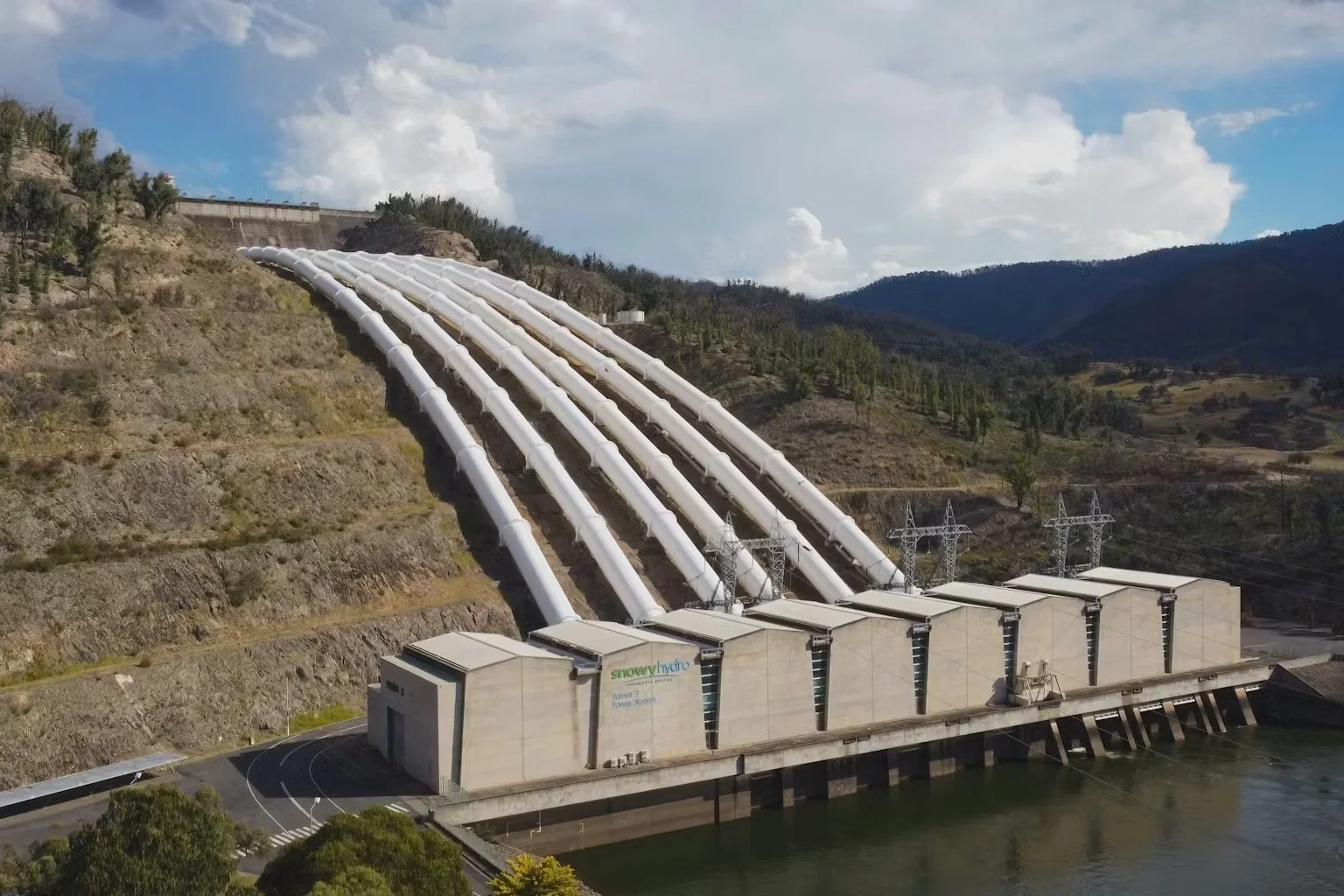
Snowy Hydro is publicly owned infrastructure but does it act in the public interest?
Over the past six years, this work has moved through real highs and hard lows: from helping secure $55.6 million in federal investment and driving major public engagement in river governance, to watching momentum slow on the ground while the river itself continues to face pressure. The current funding environment is highly volatile, and much of what we do remains unfunded. That reality has meant we have been quieter recently, even as the need for restoration and coordinated action has not eased.
We continue to hold deep capability in on-ground catchment restoration, program design, stakeholder engagement, and strategic communications that support real-world delivery.
We are now asking for your help in maintaining this campaign as we have no funding supporting this work and we are moving move into a critical phase of decision making.
We are actively seeking partnerships and aligned opportunities across delivery programs, philanthropic support, and large-scale restoration initiatives. We also welcome introductions to organisations, agencies, or funders working in waterway restoration, policy reform, or environmental delivery where collaboration could help unlock impact at scale.
Thank you:
Finally, a huge thank you to everyone who signs up to stay informed, and cares about this river. We’re beyond grateful for all of the support and kind words we receive.
When we talk about what’s happening we know at times it can sound depressing, but we know we wouldn’t be talking about it if there was nothing we can do. We know we can create real lasting change and it's made so much easier by people like you who tune in, show up, support what we do, and join in.
Prepared by Dr Siwan Lovett, Prof Jamie Pittock, Terry Koradaj, Antia Brademann and Guy Verney.