
Why is the Upper Murrumbidgee Drought Framework not being implemented when it matters most?
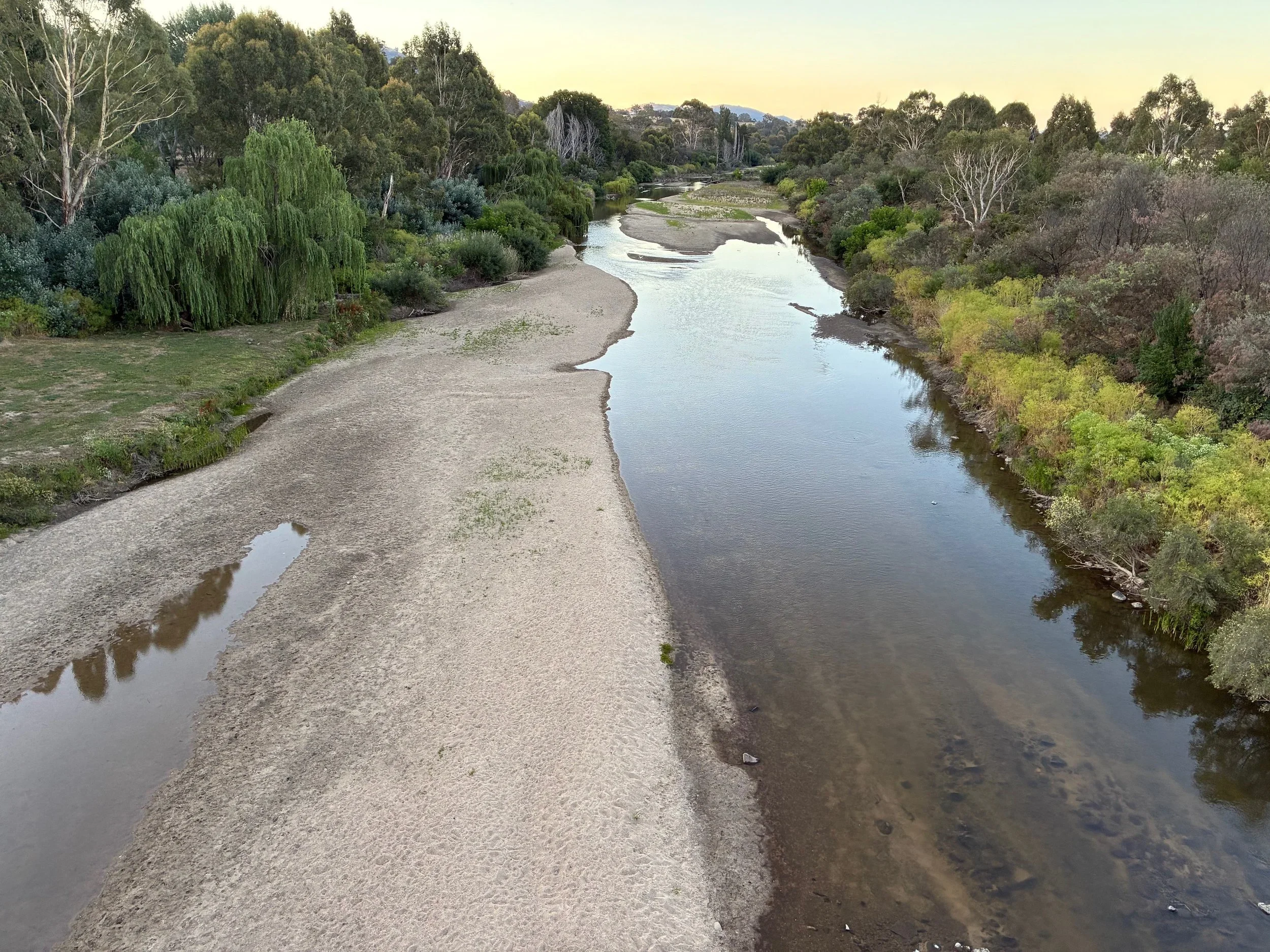
Tharwa Bridge Downstream, December 2025.
Drought response agreed, but not delivered
Over the past two summers, the Upper Murrumbidgee River has experienced dangerously low flows, falling well below the thresholds that trigger emergency water releases under the Upper Murrumbidgee Drought Operating Framework.
Yet despite $30 million being committed to support water delivery under drought-like conditions, no water was released from Tantangara Dam in response to these low flows.
In November 2023, as part of the broader Upper Murrumbidgee health strategy, around $30 million was set aside — up to $10 million per year for three years — specifically to release water during drought and protect the river, its wildlife, and refuge pools. This funding was intended to remove financial barriers, for example, compensating Snowy Hydro for lost energy generation if water needed to be released.
Despite this, in 2024–25, when the river dropped to dangerously low levels and drought triggers were effectively met, this funding was not used. The river continued to shrink, refuge pools disappeared, and fish like the critically endangered Macquarie perch were left stranded.
The Drought Operating Framework, finalised in late 2025, was designed to provide the formal operational mechanism to make sure money like this could be released promptly when triggers were met. In plain terms: the money has been available since 2023, but it sat unused while the river was in crisis.
What is the Drought Framework?
The Upper Murrumbidgee Drought Operating Framework was developed as a short-term emergency response tool to prevent environmental collapse in the Upper Murrumbidgee during drought conditions.
The Framework is meant to complement existing environmental water management programs like Snowy Montane River Increased Flow Program (SMRIF), ACT Environmental Flows, and NSW water frameworks — not replace them.
Its primary aims are to:
Avoid critical losses (e.g. protect endangered species)
Maintain key aquatic refuges (i.e. deep pools with good water quality)
Prevent catastrophic events such as fish deaths, algal blooms, and cease-to-flow periods
To do this, the Framework sets three trigger points for water releases from Tantangara Dam, depending on where flows drop and how severe the conditions are.
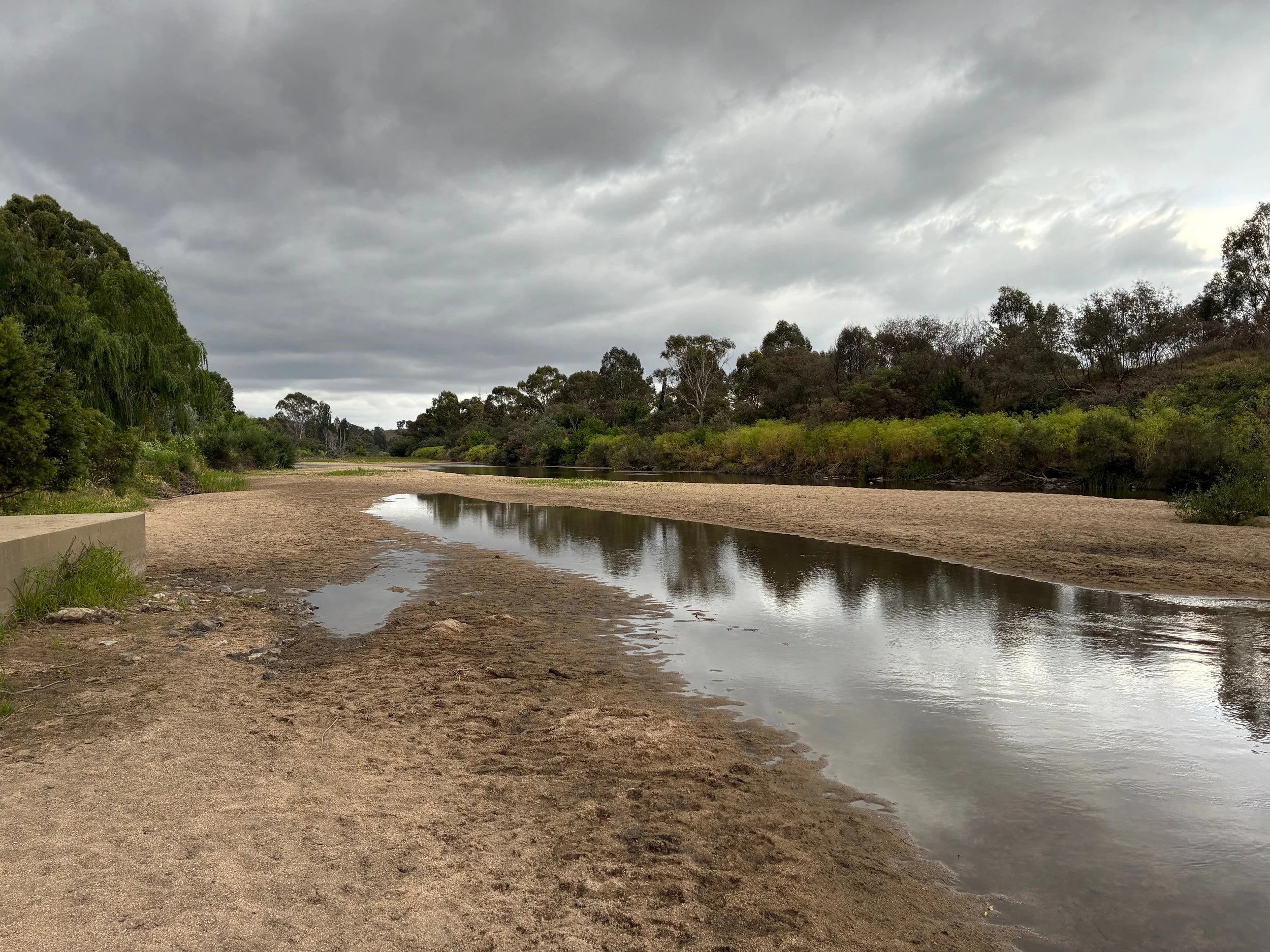
Tharwa Bridge Downstream, December 2025.
How the triggers work
Each trigger represents a different part of the river system. When any of these thresholds are breached, Tantangara Dam is meant to release water according to a specific pattern to protect the river’s health.
Here’s how it’s supposed to work:
1. Tantangara Dam trigger
Trigger: Releases from Tantangara are zero and flows upstream are ≤27 ML/day
Action: Release 30 ML/day from Tantangara to avoid cease-to-flow conditions immediately downstream
Goal: Maintain basic flows in the severely impacted reach below the dam
2. Mittagang Crossing trigger (near Cooma)
Trigger: Flows drop below 32 ML/day
Action: Releases to maintain flow at 32 ML/day
Goal: Keep aquatic refuges alive in the upper Murrumbidgee before it reaches ACT
3. Lobbs Hole Creek trigger (ACT entry point)
Trigger: Flows fall below 50 ML/day for 5 consecutive days
Action: Release a baseflow of 50–75 ML/day plus pulses of 200–475 ML/day
Goal: Ensure enough water reaches the ACT to protect river health and flow continuity
These thresholds are carefully designed to reflect natural low-flow conditions, and account for tributary contributions to ensure the river as a whole is protected.
Triggers have been breached — but still no water
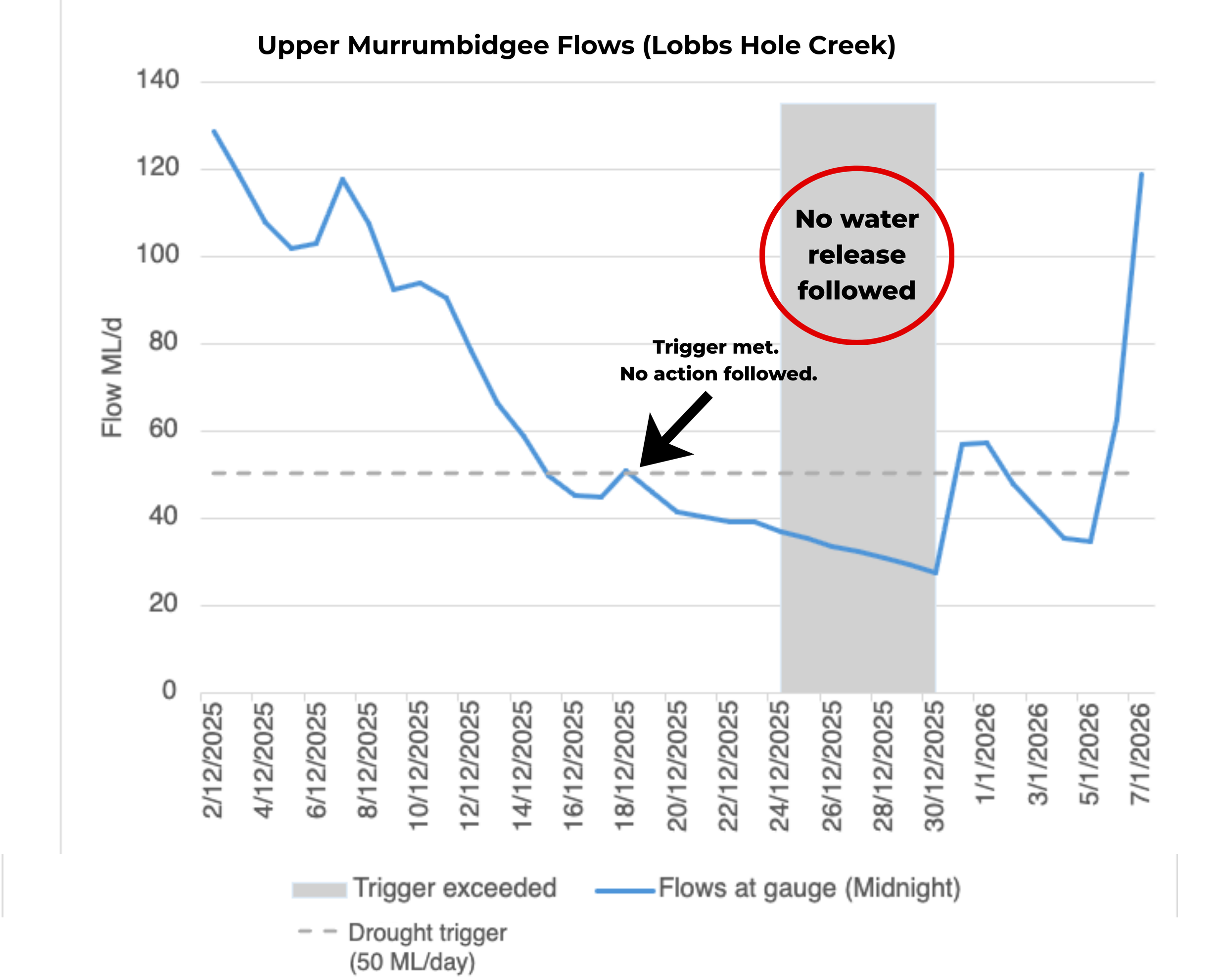
In both January/February 2025 and again in December 2025, the low-flow triggers at Lobbs Hole Creek were met. The most recent breach occurred between 24–31 December 2025, when flows dropped below the 50 ML/day threshold for more than 5 days (see hydrograph below).
According to the Framework, water should have been released from Tantangara starting 24 December 2025 — beginning with a large pulse of 200 ML/day, followed by a series of smaller baseflows. However, hydrograph data from Lobbs Hole and upstream gauges show no indication that these drought response releases were made.
So what now? Triggers met, but the river still runs dry
Despite clear low-flow conditions triggering the Upper Murrumbidgee Drought Operating Framework - not once, but multiple times - no emergency water was released from Tantangara Dam. This is confirmed in the hydrograph above which uses data from the WaterNSW live gauge site (Station 410761 – Lobbs Hole Creek) that clearly shows no corresponding increase in flow has occurred from the dam. You can check the real-time and historical data for yourself at WaterNSW’s realtime water site.
The community deserves answers. Why is the Drought Framework not being implemented when it matters most?
This is not just a policy failure — it’s a missed opportunity to protect a river already described as being in “abysmal condition” by the Independent Review Panel (Issues Paper, Executive Summary, p. iii). The same review called for "inclusive governance" and real accountability for river health — yet it seems those calls remain unheeded.
Your voice can drive action.
Share your concerns below and we'll ensure your comments reach the Commonwealth and NSW governments to push for action.
What you might comment on:
Accountability:
Why weren't drought triggers acted upon when flows dropped below thresholds? Where is the committed funding and why hasn't it been used to release water during these critical low-flow events?Transparency: What is preventing the release of allocated drought response water?
River health: What does continued inaction mean for endangered species, water quality, and ecosystem survival?
This river can't speak for itself. Let's ensure drought planning becomes drought action — not just a document on a shelf.
All submissions will be compiled and forwarded to the Commonwealth Department of Climate Change, Energy, the Environment and Water and the New South Wales Department of Climate Change, Energy, the Environment and Water. Senator Katy Gallagher, Minister Murray Watt, Minister Chris Bowen, NSW Minister Rose Jackson and NSW Minister Penny Sharpe will also receive the comments.