
Webinar LIVE: Failing Flows, the Crisis in the Upper Murrumbidgee
The Upper Murrumbidgee River is one of the least sustainably managed rivers in the Murray–Darling Basin. Environmental flows aren’t anywhere near meeting their targets, and current management rules are failing to protect this river.
In this webinar, we are joined by leading water scientist Professor Jamie Pittock, and national policy lead Anna McGuire. Together, they will draw on years of experience to explain how water is really being managed in the Upper Murrumbidgee, why current rules are falling short, and what needs to change to secure the river’s future.
Watch the Webinar:
All of the work we do through The Forgotten River project is currently unfunded. If you’re able to share a tax deductible donation of $5, it would go a long way in helping us continue sharing science, raising awareness, and advocating for a healthier Upper Murrumbidgee.
A big thank you to Jamie Pittock & Anna Mcguire for sharing their decades of research and expertise. Like us, they generously contribute their time and expertise to this work, and we are very grateful for their support.
Key insights:
1. The river is getting far less water than it naturally would
The Upper Murrumbidgee below Tantangara Dam receives only a small share of its natural flow. Over the study period discussed in the webinar, very large volumes were diverted away from the river through the Snowy Hydro, leaving the river with greatly reduced flow and much less seasonal variability.
2. The current rules are not protecting river health
A central theme of the webinar is that the existing framework was never built strongly enough to secure the flows the river actually needs. Important elements of the original deed have not been fully delivered, monitoring has been inadequate, and there is no robust built-in review process to ensure the rules evolve when conditions change.
3. Climate change makes the problem worse
The webinar explains that climate change was not properly accounted for when these arrangements were created. As inflows decline, the water available for environmental releases also falls. In other words, the system becomes less capable of protecting the river at the very time the river is under more pressure.
4. There is still a path forward
This webinar outlines practical reform options: setting flow targets based on actual environmental and community needs, improving monitoring and public reporting, upgrading infrastructure to allow better releases, and ensuring Traditional Custodians are meaningfully included in river management.
5. Change in the energy system could open new opportunities
One of the most important ideas explored in the webinar is that as Snowy Hydro expands pumped storage, it may become less dependent on once-through river flows. That creates an opening to rethink old assumptions and argue for an environmental dividend: more water returned to the Upper Murrumbidgee as the energy system evolves.
Resources:
Thank you:
Finally, a huge thank you to everyone who attends these webinars, signs up to stay informed, and cares about this river. We’re beyond grateful for all of the support and kind words we receive.
When we talk about what’s happening we know at times it can sound depressing, but we know we wouldn’t be talking about it if there was nothing we can do. We know we can create real lasting change and it's made so much easier by people like you who tune in, show up, support what we do, and join in.
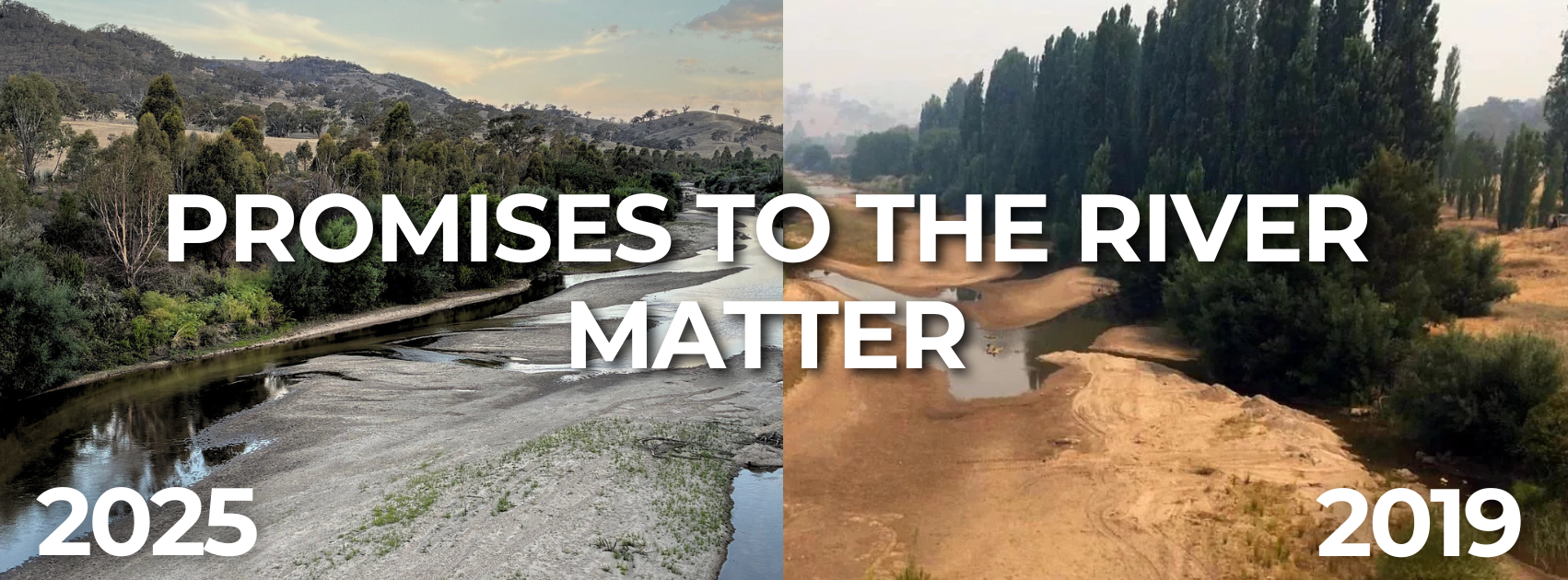
The Upper Murrumbidgee in 2019 and 2025 is a stark reminder of why we do what we do and why your support matters.